
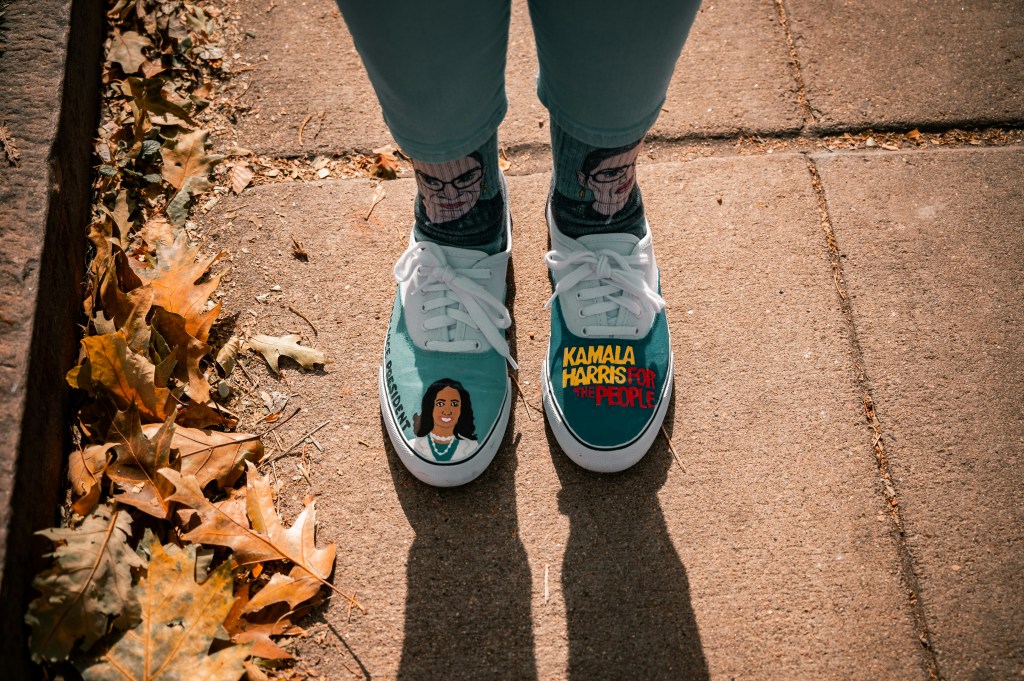
At the risk of sounding cliche, I urge you to stop listening to the pundits. They’re all focusing on the wrong things. Kamala’s 2024 campaign didn’t fail because of some strategic mishap. Everyone knows the Trump camp made a lot more errors that would have been disqualifying or downright suicidal in any other political environment, so there’s no point trying to diagnose what went wrong from that perspective. The problem goes much deeper than what was said, where it was said, and who said it.
It’s something deeper.
As a society, we have used the concepts of guilt, shame, and fear, along with their positive counterparts, to govern ourselves for generations. This approach has been operationalized differently throughout the millennia, but the crux has stayed the same. We have cultural mechanisms in place to encourage certain behaviors and discourage others. In controlling undesirable social conduct, our preventive measures are designed to make people feel apprehensive about doing certain things, depending on where they situate themselves on the guilt-shame-fear spectrum of cultures. The distinction determines the potential consequences for bad behavior, whether legal punishment, ostracism, or physical retribution. The West has long operated as a guilt culture, inculcating a sense of individual conscience among citizens so that they can self-regulate instead of relying on external forces like policing as a primary form of deterrence.
The internal mechanisms of defining values are lost. America no longer knows its place on the spectrum of morality.
An interesting development in this arena is that social media is rapidly reshaping Western culture into one driven more by shame rather than guilt. When people have become so desensitized to guilt that they have claimed absolute freedom to express themselves in utterly reprehensible ways, we have had to switch to something stronger to bring back balance — a sense of civility in public discourse, no matter how superficial.
The internal controls, the individual conception of right and wrong, have failed and led to the worst possible case of moral relativism, hence the shift toward social accountability. It’s the return of public shaming in the most public of ways. If you’re having trouble understanding universal morality, your peers will at least tell you what’s acceptable and what’s not. It’s a drastic lowering of the bar if there ever was one.
Still, it didn’t happen fast enough to make a difference. What we know today is that guilt is off the table when it comes to making us act like humans. The internal mechanisms of defining values are lost. America no longer knows its place on the spectrum of morality.
Maybe it never did — the whole democratic experiment has been nothing more than effective messaging and wishful thinking.
And that’s fine. At least today, we can definitely say we know what America really is. Trump winning his path back to the White House tells us as much.
This except appeared in Own The Libs: Politics is the New Personality. To grab your copy, click the link below.


Leave a comment